Written by Adrianna Hines
In an interview about the Black Fantasy Ball hosted by Black Pride Colorado, Lindsay Ford speaks to national ballroom leader and co-host, Moon Glasgow Brown. Brown shares how balls and drag houses are not just about “Glitz and Glam,” they are systems of support that provide community aid to LGBTQ+ and BIPOC people. Brown says “In the ballroom, there [are] so many of us that are doing work within the community, so it’s not just like we’re walking the balls, we are running organizations, we are starting campaigns, we are creating spaces for Queer people, and we are housing young people. We are creating families (Ford, 2021)!” In fact, LGBTQ organizations are often the initial pillars of assistance during a crisis in Black, Brown and queer communities. The legendary House of LaBeja was among the first spaces that hosted benefits to raise money and awareness in the 80s durning the HIV/Aids epidemic (Ford, 2021).
In a poll surveying LGBTQ+ BIPOC youth, many of them expressed that they turned to drag houses since they felt they could not come out to their biological families. This is why many “houses” are shaped by a familial hierarchy. The founders of a house are referred to as “houseparents’ and are often called “mother ” or “father ” by the members, who adopt the last name of the house to which they belong (Ford, 2021).
Photo: Linda Labejia [pictured on the far right] recounts her time as a seven year member of the House of Labejia, stating “The house is just overall supportive… I’ve always sought out a chosen family. I was in foster care when I was younger, so my family’s always been really just dismembered and spread out. So I’ve always leaned toward a chosen family. Especially being queer, I think it’s something that naturally we just do. You find you your tribe.”

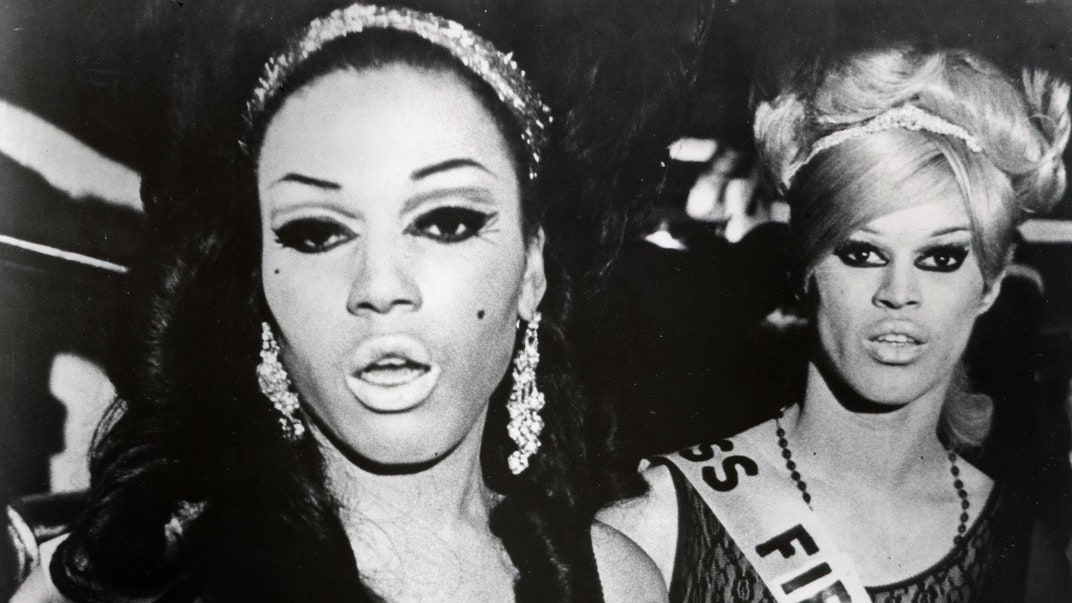
Photo: Image of Crystal Labejia [on the left] who is known as founding the “House of Labeija,” which is credited as molding the American Ballroom scene. Labejia was seen as a mother figure for many LGBTQ, homeless youths.
Bibliography:
Goodman, E. (2018, March 23). How crystal labeija reinvented ball culture. Them. Retrieved
April 18, 2023, from https://www.them.us/story/how-crystal-labeija-reinvented-ball-culture
Nguyen, A. (2019, January 25). 50 years of chosen family. The Cut. Retrieved April 18, 2023,
from https://www.thecut.com/article/the-house-of-labeija.html
 using WordPress and


Comments are closed